
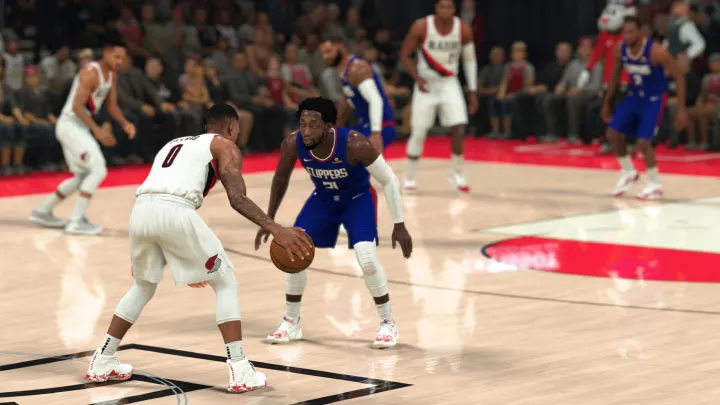
The release of NBA 2K21 was met with the kind of polarized reception that has become almost synonymous with the franchise’s recent history. While graphical fidelity reached new heights and the presentation elements continued to mimic a real-world broadcast with uncanny accuracy, the core gameplay loop—specifically the shooting mechanics—became a flashpoint for the community. For a game that positions itself as the premier basketball simulation, the introduction of a radical, skill-based shooting system created a rift between the casual player base and the competitive "pro-am" scene. This article explores the mechanics, the backlash, and the lasting impact of the "Pro Stick" shooting overhaul in NBA 2K21.
The Evolution of the Shot Meter: A Brief History
To understand why the changes in NBA 2K21 were so jarring, one must look at the trajectory of the series. Throughout the mid-2010s, NBA 2K relied on a timing-based system that rewarded rhythm and understanding player animations. The "green window"—the small, perfect release point—was the holy grail of shooting. Players learned to associate the visual cue of a jumper with the controller input, creating a muscle memory that felt rewarding and predictable.
By the time NBA 2K20 rolled around, the system was refined but predictable. Veterans of the game had mastered the timing to such a degree that shooting percentages in online play were often inflated. The developers at Visual Concepts were faced with a dilemma: how to increase the skill gap without alienating the casual audience? Their answer, implemented in 2K21, was a fundamental shift in philosophy, moving away from simple timing toward a complex, directional aiming system.
The Introduction of the "Pro Stick" Aiming System
When NBA 2K21 launched, the most significant change was the overhaul of the Pro Stick (the right analog stick). In previous iterations, the stick was used primarily for dribbling moves and simple layup attempts. In 2K21, it became the primary tool for shooting. Players were no longer just timing their release; they were now required to physically aim their shot by pulling down on the stick and then adjusting it left or right to hit a target window.
This system was designed to add a layer of precision that button-shooting lacked. The logic was sound: if you want to be a great shooter, you shouldn't just rely on timing; you should have to "aim" the ball. However, the implementation was immediately met with confusion. The new shot meter was small, jittery, and required a level of fine motor control that felt more akin to a first-person shooter's recoil management than a basketball simulation.
The Learning Curve vs. The Frustration Factor
The learning curve for this new mechanic was incredibly steep. Players who had spent years mastering the "square" or "X" button timing found themselves completely reset. Muscle memory, the most valuable asset for a 2K player, was suddenly a liability.
- The Aiming Window: The target window moved dynamically based on the player’s position and the defender's proximity.
- The Release Timing: You still had to time the release of the stick, meaning you were managing two variables simultaneously (aiming + timing).
- The Lack of Feedback: In the early days, the feedback on "why" a shot missed was often opaque, leading to feelings of unfairness.
The Community Backlash: "The Game is Broken"
Within days of the game's release, the forums and social media channels were ablaze. The consensus among the casual player base was that the game was "broken." The frustration stemmed from the fact that even wide-open shots with high-rated shooters were clanking off the rim. For many, the joy of the game—the ability to pick up a controller and play a fun game of basketball—was replaced by a tedious, punishing chore.
The competitive community, however, was initially split. Some top-tier players appreciated the higher skill ceiling. They argued that the game finally rewarded those who put in the hours to master the mechanics. Yet, even among the elite, there was a growing sentiment that the aiming system was inconsistent due to server latency. In an online environment, where milliseconds matter, asking players to perform precise analog stick adjustments was a recipe for disaster.
The Role of Latency in Online Play
One of the most critical, yet often overlooked, aspects of the shooting crisis was the role of internet latency. NBA 2K’s online servers have historically been a point of contention. In a game where the shooting window is measured in milliseconds, even a minor fluctuation in ping can throw off a player’s timing.
When you add the requirement of "aiming" to the equation, the margin for error becomes razor-thin. If a player is lagging, the visual representation of the shot meter might stutter, making it impossible to hit the center of the target window. This created a situation where the game was fundamentally unplayable for a significant portion of the user base who didn't have access to fiber-optic, low-latency connections.
The "Button vs. Stick" Divide
This created a massive divide in the meta. Players who stuck to the traditional button-shooting method found that they were significantly penalized compared to those who mastered the Pro Stick. The game was essentially forcing players to use a specific input method to be competitive, which many felt was an overreach by the developers.
The Developers' Response: Patching the Problem
Recognizing the overwhelming negative feedback, the developers at Visual Concepts were forced to act. Within weeks, they released patches that significantly altered the shooting mechanics. They increased the size of the green window for button shooters and made the Pro Stick aiming system optional rather than mandatory.
This was a major admission that the initial vision for 2K21 had failed to land. While the patches made the game more accessible, they also highlighted the lack of a cohesive long-term vision. The developers were essentially "hot-fixing" the game to stop the bleeding, rather than standing by their design choices. This created a weird middle ground where the game felt like a hybrid of two different philosophies, leading to further balance issues.
The Impact on MyCareer and Competitive Modes
The shooting crisis had a profound impact on the game's most popular mode: MyCareer. In this mode, players build a custom character and grind through games to improve their stats. Because shooting was so difficult, the "grind" became exponentially more frustrating. Players were unable to hit shots with their low-rated characters, making the early stages of MyCareer feel like a punishment rather than a progression.
In the competitive Pro-Am and Rec modes, the meta shifted rapidly. Teams stopped relying on diverse offensive sets and instead funneled everything through players who had mastered the specific, patched-up shooting mechanics. The game became repetitive. Instead of a simulation of basketball, it became a simulation of exploiting the game's current shooting engine.
The Psychological Toll on the Player Base
It is worth discussing the psychological aspect of this issue. Video games are meant to be a form of escapism and entertainment. When a game introduces a mechanic that feels unfair or broken, it creates "tilt." The shooting mechanics in 2K21 were a major source of tilt for the community.
- Loss of Agency: Players felt they weren't missing because of bad decisions, but because the game's engine was fighting them.
- Comparison to Real Life: Basketball is a game of rhythm. When the game mechanics don't match the intuitive rhythm of the sport, it breaks immersion.
- The "Pay-to-Win" Perception: Because shooting was so hard, players felt pressured to buy Virtual Currency (VC) to upgrade their shooting stats as quickly as possible to compensate for the difficult mechanics.
The Long-Term Legacy of 2K21’s Shooting
Looking back, the shooting crisis of NBA 2K21 serves as a cautionary tale for sports game developers. It demonstrated that innovation for the sake of innovation can be detrimental. The desire to increase the "skill gap" is noble, but it must be balanced against the accessibility and the fundamental fun of the game.
The legacy of 2K21 is that it forced the developers to rethink how they approach mechanics in future titles. Subsequent games in the series have moved toward a more refined, hybrid system that offers the depth of aiming without the punishing difficulty of the 2K21 launch version. The game is remembered not for its graphical improvements, but for the month where the entire community was united in its frustration.
Conclusion: A Lesson in Game Design Balance
NBA 2K21 stands as a fascinating, albeit flawed, chapter in the history of sports gaming. It attempted to push the boundaries of what a basketball simulation could be by introducing a high-skill ceiling through the Pro Stick. However, by ignoring the realities of online latency and the importance of muscle memory for a dedicated player base, it created a crisis that nearly alienated its core audience.
The lesson here is clear: mechanics in a simulation game must feel intuitive. They should enhance the fantasy of playing the sport, not obscure it behind a layer of complex, jittery inputs. While the patches eventually stabilized the game, the damage to the player experience was done. NBA 2K21 remains a reminder that in the world of game design, the most important metric isn't just the "skill gap"—it's the fun factor.