






In the horror gaming landscape, few titles utilize sound as profoundly as Choo Choo Charles. While many horror games rely on visuals—blood, darkness, and sudden jumpscares—Choo Choo Charles understands that terror is born not from what is seen, but what is heard. The screech of metal, the distant whistle, the rustle of the wind through abandoned rails—all of these form a symphony of dread that defines the player’s experience.
This article explores the psychology of sound design within Choo Choo Charles, examining how every creak and clang contributes to immersion, tension, and emotional exhaustion. We’ll move through the stages of the player’s auditory journey, showing how the developers orchestrated fear through silence, noise, and everything in between.
The Prelude of Isolation: Establishing the Soundscape
When the player first steps into the world of Choo Choo Charles, the environment hums with a haunting emptiness. It’s not silent—there are ambient layers of wind, ocean waves, and rustling leaves—but it feels void of life. This initial stillness sets the psychological stage.
The player’s ears adjust, searching for patterns in the quiet. The game manipulates this human instinct, making every faint sound a potential threat. A snapping twig could be just nature—or Charles approaching from afar. This uncertainty turns hearing itself into a weapon and a curse.
In these early moments, the absence of intense music mirrors the isolation of the protagonist. The auditory world feels empty because the island itself is broken—its inhabitants gone, its structures decayed, and its ecosystem warped by fear.
The Echo of Metal: Characterizing Charles Through Sound
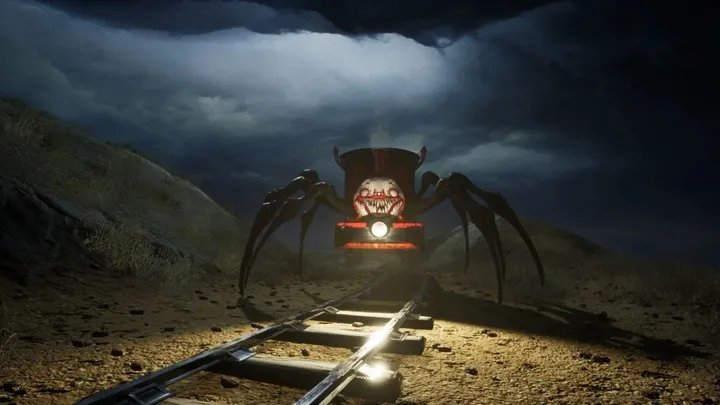
Charles, the demonic train-spider hybrid, is defined as much by his sound as by his monstrous design. His presence is never subtle—metallic clanks, mechanical screeches, and inhuman growls fill the air long before he appears.
This approach creates a layered identity for Charles. He is not merely a visual monster but an auditory one. His sounds echo through the island like a living alarm system. The grinding of his wheels against the track has a rhythmic cadence, almost like a twisted heartbeat, making him feel both mechanical and organic.
The developers intentionally distorted industrial noises—brake squeals, metal stress vibrations, and reversed locomotive samples—to create Charles’ voice. This gives him a personality that is simultaneously recognizable and alien, evoking fear on a primal level.
The Silence Between Screams: The Role of Absence in Sound Design
One of the most unsettling techniques used in Choo Choo Charles is the weaponization of silence. Horror thrives on contrast, and the game understands this deeply. After moments of chaos or pursuit, players often encounter complete stillness—no music, no ambience, no wind.
This silence acts as a psychological vacuum. The player’s mind, accustomed to tension, begins to anticipate the next sound with dread. It’s not the loud moments that cause terror; it’s the quiet waiting between them.
This manipulation of expectation turns silence into an active gameplay element. It transforms exploration into anxiety, ensuring that even moments of calm are saturated with tension. Silence becomes the loudest sound in Choo Choo Charles.
The Player’s Train: A Counterpoint of Comfort and Noise
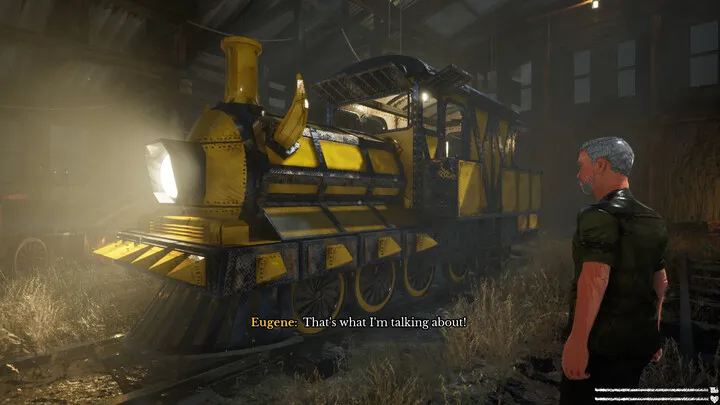
The player’s train serves as both sanctuary and instrument of survival. Its engine’s steady hum, rhythmic chugging, and mechanical rattle provide a sense of security—until Charles interrupts it.
This sound contrast reinforces emotional pacing. Inside the train, players hear stability: the purring motor, the hiss of steam, the clicking of levers. These sounds are grounding, rhythmic, and even comforting. But outside, the world is chaotic. The difference between the two soundscapes heightens immersion, allowing players to feel when safety ends and danger begins.
The developers cleverly allow the player’s train to evolve sonically as upgrades are made. Stronger engines, new parts, and repaired machinery all subtly change the tone, symbolizing progress and control in an otherwise unpredictable environment.
Environmental Resonance: How the Island Speaks
The island in Choo Choo Charles is not just a backdrop—it’s a living entity that communicates through sound. Each biome has its own distinct tone: forested areas echo with insects and shifting leaves, while mining zones groan with collapsing tunnels and distant machinery.
This environmental sound design acts as a form of storytelling. Without explicit dialogue or exposition, the island reveals its history through echo and decay. The broken rails creak as if remembering the trains that once ran smoothly. The abandoned settlements hum faintly, haunted by the ghosts of industry and progress.
Through these layers, the island becomes a sonic reflection of the game’s themes—abandonment, corruption, and technological monstrosity. The world’s ambience isn’t random; it’s orchestrated to parallel Charles’ domination of nature.
Dynamic Soundscapes: The Pulse of Pursuit
When Charles attacks, the soundscape shifts instantly. The environment’s calm dissolves into chaos—metal grinding, alarms blaring, train horns screaming. But it’s not mere noise; it’s an organized storm designed to overwhelm.
The dynamic transition between states—peace and panic—is seamless. The game’s sound engine triggers adaptive layers of intensity based on proximity and damage, creating an organic progression of tension. The closer Charles gets, the louder and more distorted the world becomes.

What makes these chases memorable is not just volume, but texture. The auditory distortion mimics panic, blurring the boundaries between sound and emotion. Every shriek of metal feels like a direct assault on the player’s nerves, forcing them to experience fear in real time.
The Human Voices: Echoes of Desperation
Throughout the game, players encounter NPCs who contribute to the auditory tapestry. Their voices are strained, hushed, or broken—reflecting the trauma of survival in a world dominated by a mechanical predator.
These voice performances are deliberately subdued. The characters rarely shout or express overt emotion, which contrasts with the loudness of Charles and the world around them. This quiet human tone reinforces vulnerability.
Even in dialogue sequences, background ambience never disappears. Wind, wood creaks, and faint metallic echoes persist, reminding players that no conversation is ever safe. Every word spoken exists within the echo chamber of fear.
The Mechanical Choir: Industrial Horror as Aesthetic
Choo Choo Charles builds much of its horror aesthetic around industrial sound. The fusion of mechanical noise and organic screams forms what can be described as an “industrial choir.”
This concept takes inspiration from musique concrète—a form of experimental sound art that uses real-world noises as musical instruments. The developers of Choo Choo Charles employ similar methods, turning the sounds of locomotives, gears, and engines into rhythmic motifs that form the background score.
The result is a constant sense of unease. The line between music and noise disappears. What once symbolized progress—machines and industry—now becomes the source of terror. It’s a sonic metaphor for technological corruption, where human creation turns against its maker.
Psychological Immersion: Sound as Fear Conditioning
Sound in Choo Choo Charles does more than set mood—it conditions behavior. Through repetition, players begin associating certain noises with danger. The faint whistle in the distance or a metallic screech becomes enough to trigger adrenaline.
This is a form of Pavlovian conditioning. Over time, the brain learns to predict threats based on sound cues, creating real emotional responses. Even when Charles isn’t nearby, players often hear phantom sounds—echoes that don’t exist but feel real due to auditory memory.
By exploiting this psychological mechanism, Choo Choo Charles achieves deeper immersion than many horror titles. It transforms fear from a reaction into an anticipation—a constant state of readiness that never fully fades.
The Crescendo and the Quiet: Emotional Resolution Through Sound
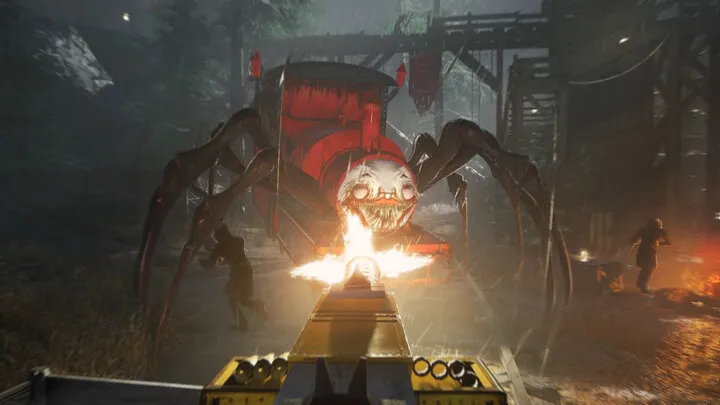
In the game’s final act, the sound design shifts again. As Charles’ defeat approaches, the audio world becomes chaotic and distorted, a crescendo of metal and fury. When victory comes, the noise collapses—leaving behind silence once more.
This moment of quiet is not peaceful; it’s haunting. After hours of tension, the player is left with the absence of threat and the echo of trauma. The silence feels earned but unnatural, as though the world itself struggles to remember calm.
In this final auditory gesture, the game closes the emotional loop. The sound that once terrified now feels nostalgic. The player realizes that the noise defined the experience—that fear, tension, and release were all conducted by sound.
Conclusion
Choo Choo Charles is more than a horror game—it’s a sound experiment that uses audio to reconstruct fear from the ground up. Every hiss of steam, every echoing rail, every moment of silence serves a narrative and emotional purpose. The monster itself may be unforgettable, but the true terror lies in the sounds that surround it.
Through its meticulous sound design, Choo Choo Charles demonstrates that horror doesn’t need to scream to be heard. Sometimes, all it takes is the faint echo of a train whistle in the distance.